
Who Says Math and Art Don’t Mix?

Kawasaki’s innovative design eliminates annoying screws that loosen and fall out.

Remember your high school days?  If you secretly envied the nerds who excelled in math and science, you probably took maniacal pleasure in seeing them struggle in art class.  And those artsy kids, didn’t they always go into a panic when they had to take a math test?  The two disciplines seem almost mutually exclusive and yet, there is Kazuo Kawasaki, who not only combines them, but manages to excel at both.

Kawasaki’s playful scissors in the shape of an X and an I

Carna Wheelchair, 1989 by Kawasaki, is in the New York MOMA collection.

Born in the Fukui Prefecture of Japan, Kawasaki graduated from the Kanazawa College of Art in 1972.  He went on to become an award-winning industrial designer working for the likes of Apple, Fujitsu and Sony and he is the creator of the EIZO brand of computer displays.  Not to be limited or tied down by the corporate sector, he also produced acclaimed functional art designs, such as his “Carna” folding wheelchair and scissors in the shape of an X and an I, which are in the New York’s Museum of Modern Arts’ collection. And he’s currently teaching at Osaka University, while serving as a visiting professor at both Tama Art University and Kanazawa Institute of Technology.

Sarah Palin wore Kawasaki’s 704 model during her 2008 bid for the vice presidency.

Like everything else he touches, Kawasaki’s eyewear line has enjoyed fabulous success – so much so that Sarah Palin chose his 704 model with SP shape to complete her look as a vice presidential candidate in the 2008 campaign.

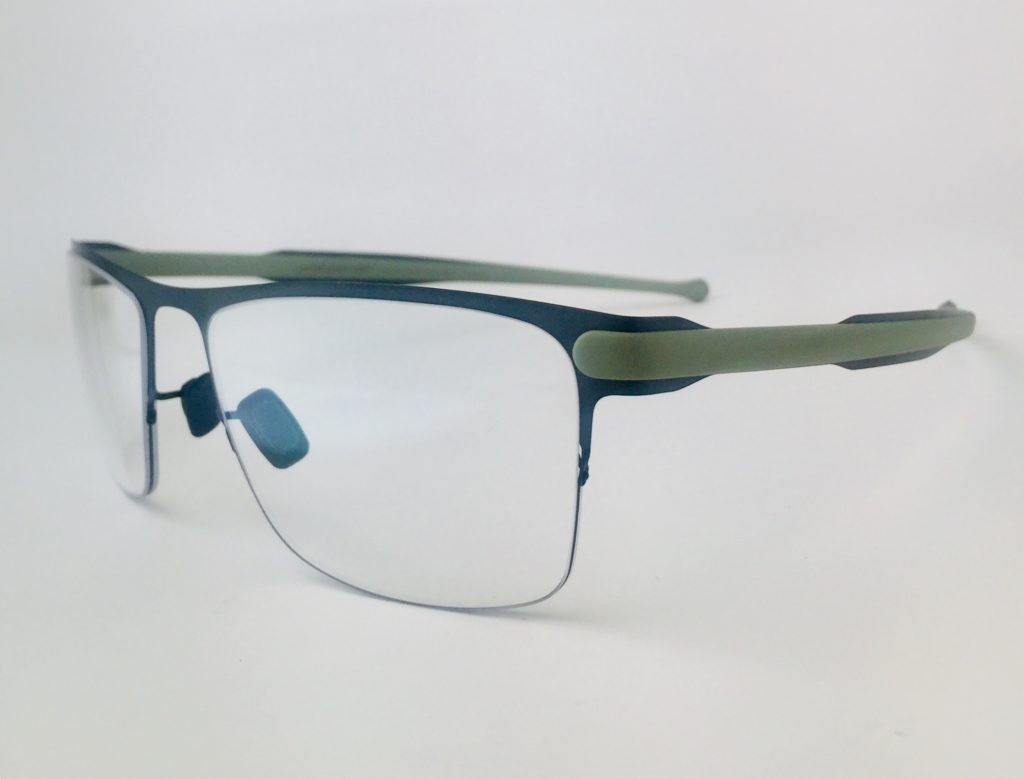
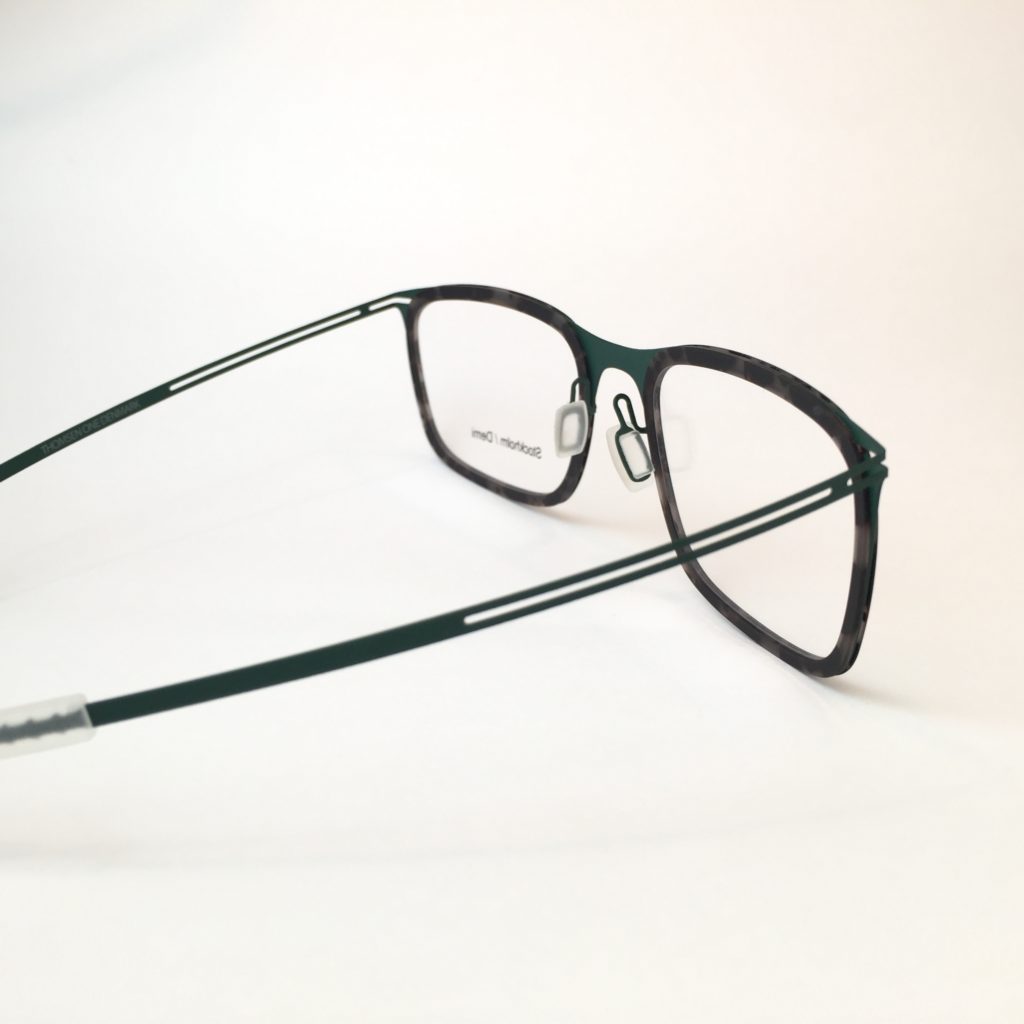
Kawaski’s eyewear combines his engineering prowess with his artistic talents and his love of sophistication and sleek lines.  He developed a novel screwless, tension-mounted frame design and chose beta titanium for its durability and light weight.

Curious?  Come see his MP series eyeglass frames at our store.


An updated take on John Lennon’s look with Kawasaki’s innovative anti-tension technology.

Why choose Anti-Reflective coating lenses?

Anti-Reflective treatment is one of the most important things you want to be included in your lenses. Anti-Reflective Treatment cuts the glare from night time driving, take starbursts effects away from your point of view and can reduce any glare that may be directed towards those who work in front of computer screens. In addition, AR lenses are great from a cosmetic sense since they don’t show any glare or light that normally reflects off a regular set of lenses.  Visually speaking, AR lenses will allow you to distinguish and see objects more clearly, since light isn’t bouncing off the lens, but rather is passing through the lens.

Anti-glare lenses helps you:

See Better: no glare lenses mean safer, more comfortable nighttime driving by reducing glare from headlights, taillights and street lights

Look Better: no glare lenses stay clean, clear, and glare-free, so they look virtually invisible to those around you. People can see your eyes, instead of just your glasses

Feel Better:  fewer headaches and less eye fatigue, which are caused by reflections off of computer screens and overhead lighting.


New Arrival: Blackfin Titanium Eyewear

The Blackfin frames are fully designed and manufactured in Italy by Pramaor Italian titanium eyewear.

Titanium is a truly special material with unique features, suitable for the realization of optical frames. A frame made of titanium is 48% lighter than a similar one made of the more common metals. Titanium is as resistant as steel, but 40% lighter.

Nani, Manchester United’s outstanding footballer, seen with Blackfin sunglasses

A perfect synthesis of lightness, performance and aesthetic harmony, the Blackfin glasses have been conceived and built for a dynamic, sophisticated and modern target, always on the move and focused on innovation. A perfect match for the vibrant world of football. The player Nani from Manchester United was seen wearing the sun model BF 575 Vulcano, completely made of titanium, obtained from a single sheet, with ultrathin temples in beta titanium. The markings, the decors and the cutting of the temples are carried out with a laser technology for an eyewear with a strong character and a defined and clear design. The titanium core permits an extraordinary lightness and high mechanical performance which make it the material with the best mechanical strength / weight ratio, completely biocompatible, nontoxic and hypoallergenic. Lastly, the ultrathin and ultra-adjustable temple tips give maximum comfort to the wearer. The simplicity of its features dresses the face convincingly.

An Evening of Glamour: February 28th from 6 to 8 pm

An Evening of Glamour

Stop by and shake off the winter blues at our “Evening of Glamour” event on February 28th from 6 to 8 pm at our shop at 210 Westminster Street in Providence.

Indulge in refreshments, including home-made “Cup Cakes by Eliza,” while enjoying enchanting piano music by Mark Taber and playing with our amazing collection of unique eyewear.  Just for fun, you can have your photo taken in any frame of your choice by a professional photographer in front of a celebrity-style backdrop, and you’ll walk away with a 4”X6” glam photo to show off to your friends.

You can also choose to enter your photo into the contest on our Facebook page.  If your photo gets the most votes, you’ll win a free eyeglass frame.  Even if you don’t get the most votes, you’ll get a 20% off coupon for any frame in the store.

Enjoy the evening out on us.   We promise it will be a memorable one.

P.S. Dear EYEMED insurance member, we accept your insurance again.

American Optical: Sunglasses with Real American History

American Optical’s iconic Wayfarer look-alike

It’s a story of the American dream turned to reality.  William Beecher (1805-1892), born on a Connecticut farm, ventured to Providence for an apprenticeship in jewelry making.  Little did he know how this decision would impact American history some years later.  After moving to Southbridge Connecticut to practice his new trade, he tripped across a very crudely made – and unfortunately, very typical – pair of eyeglasses imported from Europe.  “I can do it better,” he said to himself.  And he did.  The eyewear company he founded in 1833 eventually expanded and merged with other, smaller optical shops to become American Optical in 1869.  By the turn of the century, it employed 2,000 workers and soon expanded to include an office in London.

American Optical was a pioneer in ultraviolet protection

Opthalmic eyeglasses were the original, but not the only, product of this early eyewear company.  American Optical took its first step into the world of sunglasses in 1876 with tinted lenses in a variety of shades.  The critical leap forward came in 1913 when the company obtained the rights to glasses invented by British scientist Sir William Crookes, which launched the concept of ultraviolet protection.

But fashion eyewear  wasn’t enough for this innovative company.  During the World War I, American Optical designed and built an amazing and truly innovative mobile eyeglass fitting facility to provide optical support to U.S. and Allied Forces in Europe.  The mobile units – eight in all – contained frames, lenses, machinery and refraction equipment to allow qualified personnel in the field to conduct eye exams and fit troops with ophthalmic eyeglasses and sunglasses.  Through these mobile facilities, American Optical provided 2.5 million eyeglasses to the U.S. Government during the war.

American Optical expanded its support to the war effort in the Second World War to include goggles, gun sights, bombsights and other optical instruments used for military hardware, as well as eyeglasses. In fact, American Optical’s contributions in support of the U.S. military were so substantial that the company received the Army-Navy “E” award in recognition of its efforts.

Underneath that helmet, Neil Armstrong’s wore American Optical pilot sunglasses when he made that historic first step onto the moon in 1960

The company’s connection to the U.S. military didn’t end with the war.  In 1958, the company released the Flight Goggle 58, also known as the “Original Pilot Sunglass,” to give U.S. pilots maximum performance, protection and comfort.  Apollo 11 Commander Neil Armstrong wore this sunglass when he stepped onto the surface of the moon in 1969 and it’s still in production today.

At least one Commander-in-Chief also benefitted from American Optical’s superior technology.  A pair of American Optical sunglasses is among the collection of his personal effects on hand at the John F. Kennedy Memorial Library.

“Made in USA” — it’s a beautiful thing.

Through a stroke of great luck, we’ve acquired a collection of never-worn vintage American Optical sunglasses similar to the ones JFK wore – Wayfarer look-alikes with real glass lenses.  We offer them for just  $252.  Come in and try them on for a walk down the lane of American history.


Project Runway: The Cat Eyes Have It

Joseph Aaron Segal wearing his Jean Lempereur glasses from Providence Optical

Lifetime Television launched the 11th season of the reality fashion design competition show Project Runway last Thursday and among the contestants who made the cut in the season premier was Providence’s own Joseph Aaron Segal.  A graduate of RISD’s MFA Textile Design program, Segal started out as a fabric maker, with a heavy concentration on knits and then progressed to making high end apparel utilizing his own playful fabrics.  He is particularly enamored with cats, and he frequently features them – in profusion — sitting calmly and staring wide-eyed with luminous intensity.

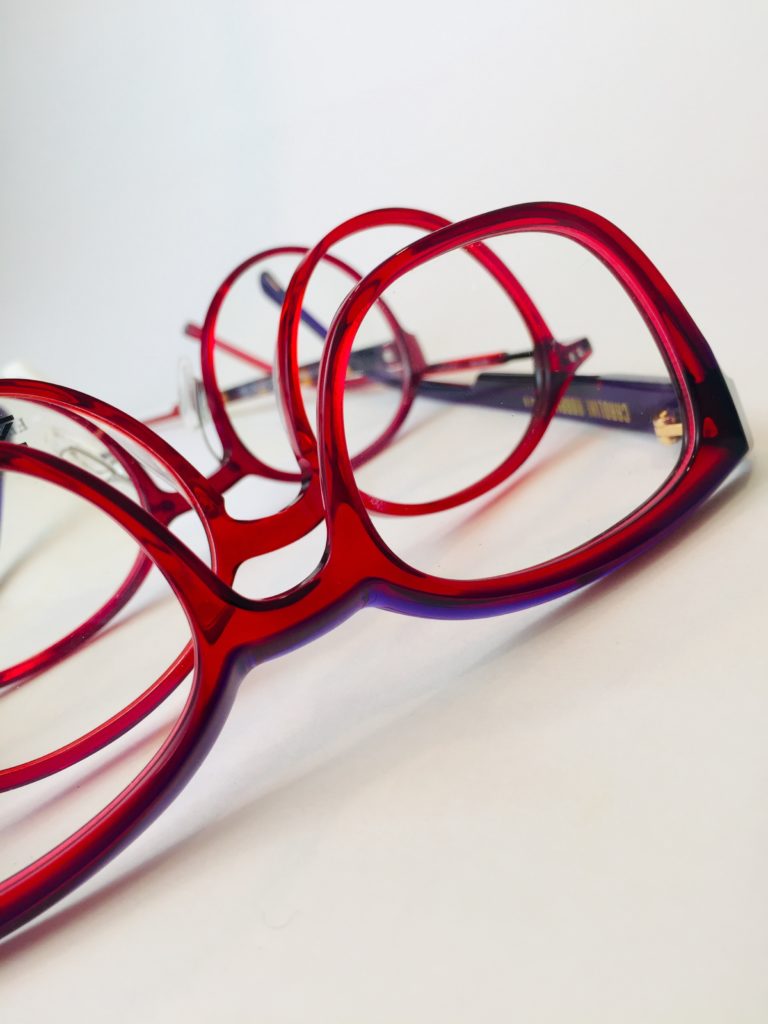
Jean Lempereur frame in deep violet with red accents.

Segal has adopted the same wide-eyed look for his own visage, thanks to a pair of round Jean Lempereur specs (model JL 3025) that he purchased here at Providence Optical.  His choice of gray and white stripes fits purr-fectly with his feline fancy.  The solid opal color on the bottom half of the frame fades into the background, which pulls the viewer’s s attention upward, further enhancing the quizzical, wide-eyed look.

The JL 3025 in eggplant with orange accents

The JL 3025 also comes in a solid tortoise (for a professorial look), an artsy eggplant with orange accents, and a very deep violet with a subtle ring of red around the lenses for those who want to make others do a double take.

Segal has two fashion labels, World of JAS and Pretty Snake, which are sold online and in boutiques in the U.S. and Tokyo.  He also teaches industrial knitting at RISD.

Kent Stetson Rocks the Runway at StyleWeek NorthEast

BIG NAZO’s wide-eyed robot shows off a large-eyed handbag by designed Kent Stetson.

BIG NAZO’s skeleton daintily carries a demure black bag by Stetson.

Tuesday night, Providence-based handbag designer Kent Stetson surprised and delighted the audience at StyleWeek NorthEast by showing off his new collection with the help of “models” from Providence’s own BIG NAZO Band.  The hilarious larger-than-life cartoon characters paraded down the runway swinging and flaunting Stetson’s newest handbag collection.  What handbag would a skeleton carry?  Why a shiny black one with an x-ray-like print, of course.  And for a bug-eyed robot?  Nothing but a sassy orange-and-black number with a big imprinted eye would do.

Kent Stetson takes the stage sporting specs from Providence Optical.

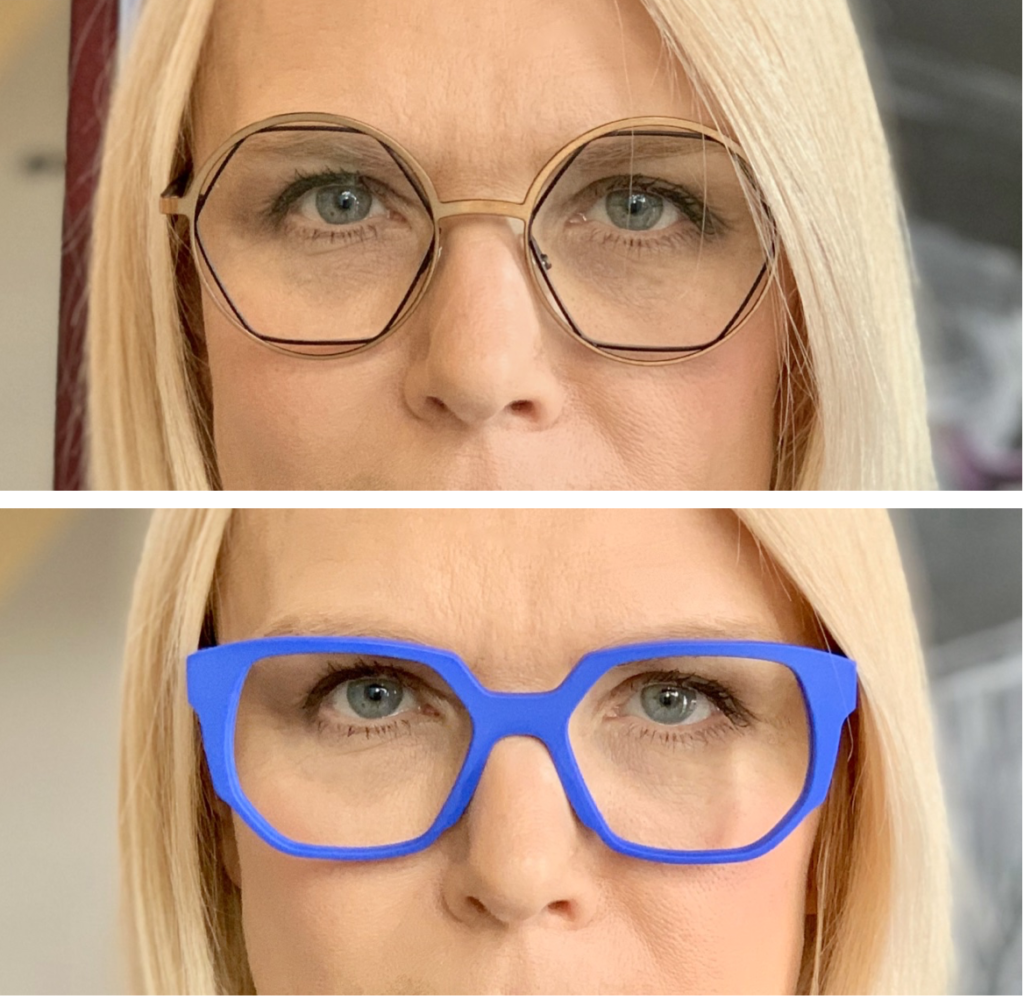
And what did Mr. Kent Stetson himself wear for his appearance?  Eyeglasses handcrafted for him by Providence Optical, of course.  These one-of-a-kind specs have asymmetric lenses that make one of his eyes appear larger, echoing the theme of the big-eyed robot with the giant one-eyed purse.

Styleweek Northeast continues through Saturday, February 2 at the Providence Biltmore.  Don’t miss it!


Stetson shows off his handcrafted “wide eye” specs with their creator — Providence Optical’s Onega, wearing her own handmade glasses that juxtapose earthy brown and electric blue hues.

Pierre Eyewear: A Luxury Car Kind of Sleek

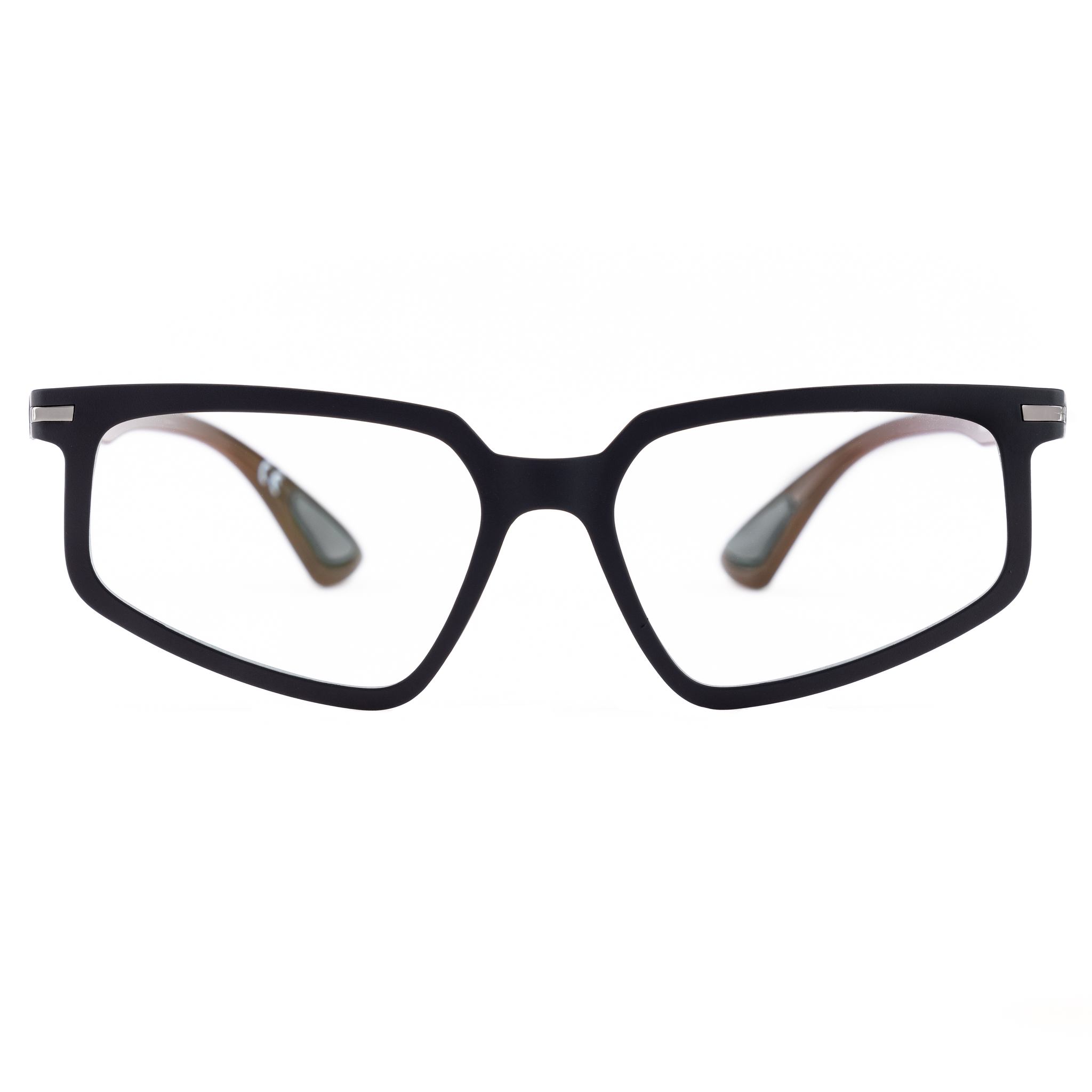
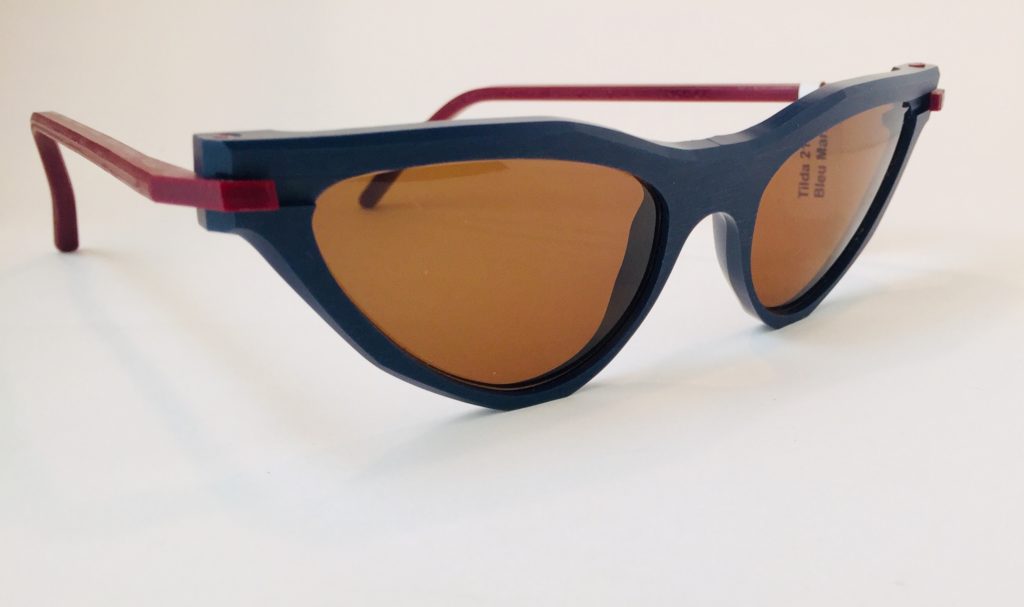
Pierre’s designs feature exquisite colors and sleek form.

Pierre Eyewear’s founder, who prefers to be called only by his first name, has a love affair with sleek designs.  Influenced by his passion for the Porsche 911, Pierre has created a line of eyewear that blends his passion for simple elegance with meticulous attention to detail in each handcrafted frame.

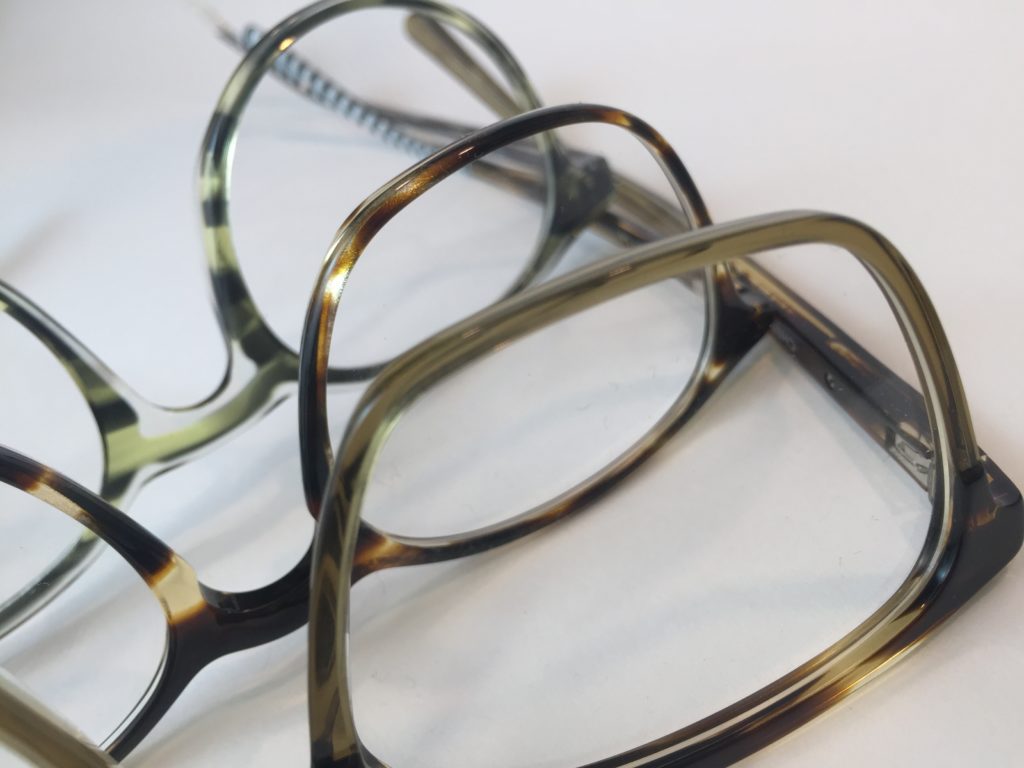
Innovative technology makes plastic look like real wood.

A native of France, Pierre spent 10 years in the United States, working with designers at Nina Ricci, Lacoste and L’Amy.  After his return to France, he decided to put his business degree to use and developed his own line of designer eyewear.

In keeping with the spirit of Porsche, Pierre views eyewear as a marriage of art and performance.  His designs feature carefully sculpted, curving lines and deep, luxurious colors. At the same time, they are crafted for an exceptionally comfortable fit.

Pierre sums up his philosophy this way:

“Without a soul, eyewear is only an ocular prothesis.  It is the creator who gives it life.”

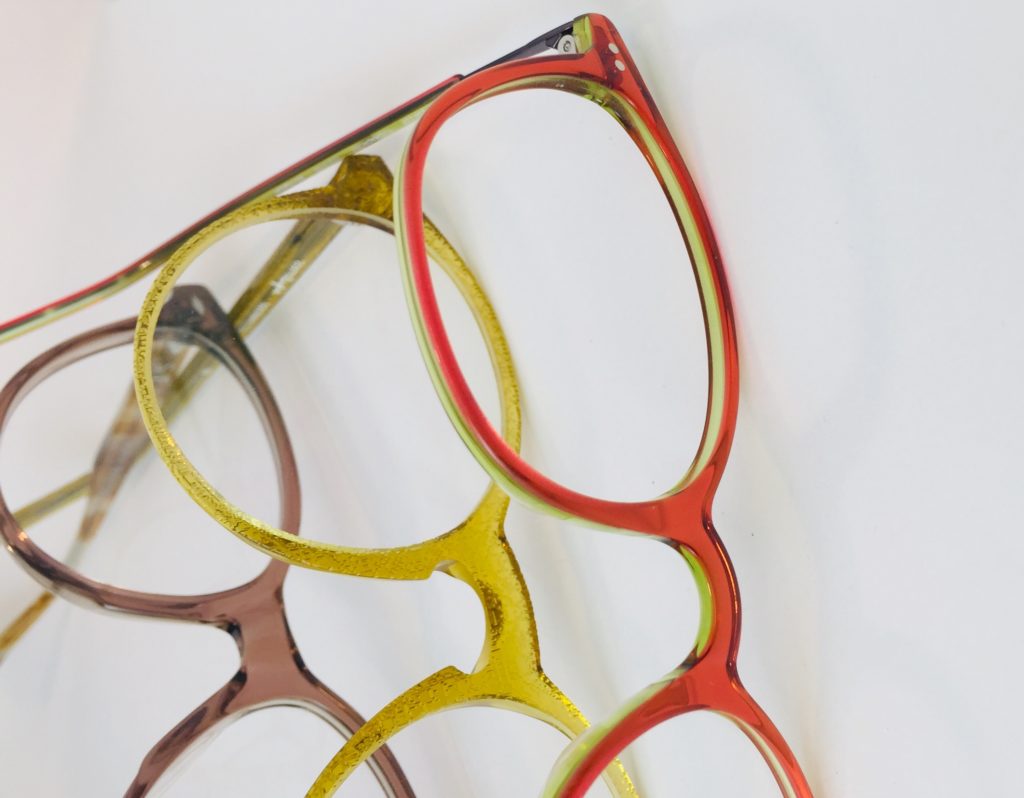
Layer on layer of color provides rich hues and sturdy construction.

Providence Optical is pleased to announce the addition of Pierre Eyewear to our collection — unique designs and exceptional hand craftsmanship at only $375 per pair.


Where Did I Put My Readers???

See Home Readers — Only the French could come up with such an artistic answer the problem of wandering readers.


Finally! A way to glance at recipes without having to take your glasses on and off.

Tired of hunting for your readers all over the house?  Leave it to the French to come up with a solution that is both artistic and practical.  See Concept’s “See Home” readers look like a pair of opera glasses mounted on a stand, which adds a whimsical touch to any room of your house.  Yet they’re practical — always at the ready and you can’t lose them because they are attached to the stand via a stainless steel chain.  Because you can change the distance between the lenses and your eyes, depending on how you hold them, the +2.50 strength works for almost everyone.  And you won’t need to get stronger ones every year as your eyes need additional help on your journey through time.

Fall asleep without risk of bending your glasses frame.

See Home readers come in a variety of vibrant colors, muted tones and metallics to match any room décor.  You can use them to read in bed at night and you don’t have to worry about breaking the hinges or bending the frame out of shape if you fall asleep and roll over on them.  Place them around the house in areas where you need a quick look at small print, like in the kitchen for following a recipe or near your desk for looking through your mail.  Put an extra pair in your office and you’ll have both a conversation piece and a pair of readers that never gets lost under your paper or left behind in the conference room.

Give your office mates something to really talk about!

Come look at our colorful See Home collection – just $45 each.